
Brand loyalty in retail and B2B isn’t what it used to be. The tried and trusted loyalty program strategy — earn points, redeem generic discount, repeat – no longer works. Customers and employees today expect you to know them, value their time, and deliver personalized offers. And guess what? The trends in loyalty programs in 2026 lean into that.
These loyalty strategies reimagine what it means to reward and engage with an audience based on personalization, speed, and real value.
Because the difference between thriving and struggling often comes down to understanding what customers actually want from loyalty programs today. Generic point systems create mediocre results. Delayed gratification breeds disengagement. Limited reward options signal that you don’t really know your customers at all.
Do you struggle with:
- high customer churn despite investing significant budget in traditional points-based loyalty programs
- Personalizing rewards at scale across diverse customer segments
- Building infrastructure to integrate modern digital incentives like gift cards and mobile top-ups into your loyalty strategy
These challenges aren’t going away on their own. In fact, your customer engagement will only drop further as consumer expectations evolve faster than most loyalty programs can adapt.
If you want to build lasting customer relationships in 2026, you need to be able to deliver personalized experiences – and that means building the infrastructure to deliver diverse, personalized rewards instantly.
This article explores ten trends in customer loyalty that are defining retention strategies this year:
- AI-powered personalization
- Instant gratification through real-time rewards
- Strategic brand partnerships
- Mobile-first and omnichannel experiences
- Gift cards as premium loyalty currency
- Telco loyalty programs leveraging mobile top-ups
- Tiered programs that drive status and progression
- Subscription and premium loyalty models
- Sustainability and purpose-driven rewards
- API integration and composable loyalty architecture
What’s more, we’ll zoom in on what many of these loyalty program trends have in common: the API platforms managing these gift cards, mobile top-ups, and digital payouts. These all-in-one platforms are becoming essential infrastructure for businesses serious about reducing churn and increasing lifetime value.
Read on to find out all about the future of loyalty programs.
[Want to build a loyalty program that can grow your business? Get in touch with Reloadly to book a free demo of our all-in-one platform, or sign up for our newsletter to receive customer retention strategies that actually work.]
What are the new trends in customer loyalty?
A strong loyalty program is a competitive advantage you can’t miss having as a company. Nearly three in five consumers prioritize shopping where they are loyalty members, with 54% joining loyalty programs to maximize savings, the 22nd annual loyalty report from payment provider Carat shows.
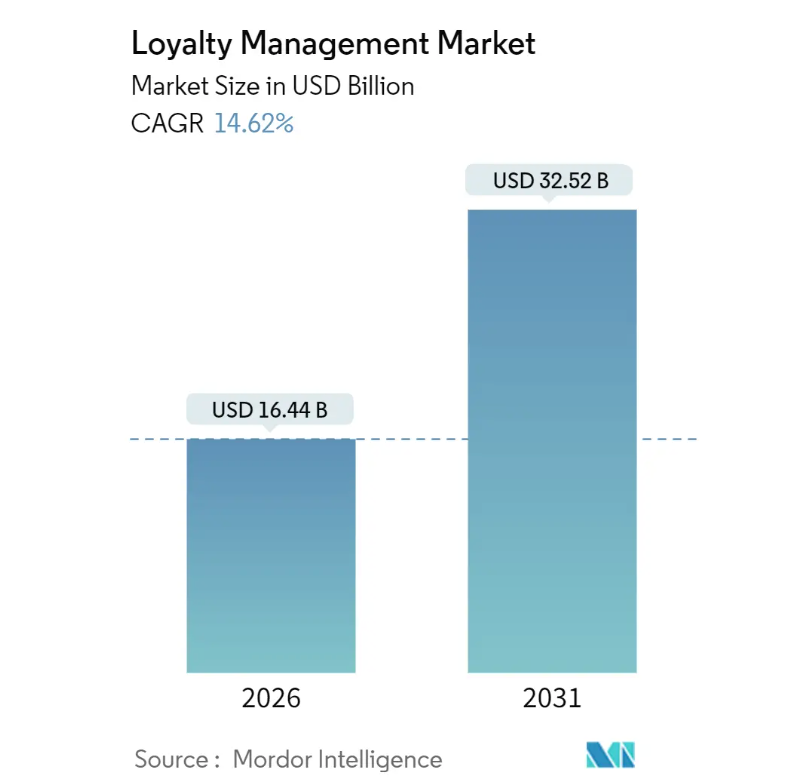
It’s no wonder then that the loyalty marketing industry is booming. Global loyalty management is projected to surpass $32.52 billion by 2031, according to market analyst Mordor Intelligence, growing at a robust 15% annually as businesses recognize that retention drives profitability more efficiently than acquisition.
Yet here’s what’s telling. A staggering 80% planned to revamp their programs by 2025, according to a 2022 report by cloud service Antavo, because traditional approaches weren’t delivering the engagement they needed.
Businesses aren’t just tweaking reward structures. Instead, they’re reimagining loyalty through technology.
So what is driving this transformation of the loyalty landscape? The following twelve trends in loyalty programs represent the biggest shifts in how businesses win and retain customers in 2026:
1. AI-powered hyper-personalization
You’ve heard the news by now. Whether customers buying into your brand or employees expecting perks, your target user expects you to understand their preferences and needs, and deliver rewards tailored to them specifically – not some broad demographic segment.
AI is making these levels of personalization scalable. AI-powered loyalty programs achieve 39,6% higher enrollment rates, research from AI provider Netguru shows, and see members spending 37% more in personalized programs than traditional ones.
AI-driven personalization works like this: Machine learning algorithms analyze customer data like purchase history, browsing touchpoints, engagement patterns, and other metrics to recommend the perfect personalized offer for each customer at precisely the right moment.
The technology goes beyond customer base segmentation. Predictive analytics identifies existing customers who are at risk of churning to automatically trigger a personalized retention offer. Behavioral pattern recognition spots opportunities to reward positive actions before customers even realize they want recognition.
Once AI matches the right reward type to the right customer profile through AI, you can start personalizing loyalty rewards at scale.
2. Instant gratification through real-time rewards
Delayed rewards are harder in the era of instant gratification. That’s why loyalty program trends in 2026 are moving toward immediacy. “Instant gratification is becoming the expectation, even for retail payments,” Rolando de Gracia, Chief Commercial Officer at Concora Credit, notes. “This trend will have shoppers favoring brands that deliver value at the moment.”
Your users simply don’t want to deal with points taking days to post to an account. Or navigating confusing catalogs and waiting weeks for delivery.
Because delays create friction – and every touchpoint of friction increases the risk your customer disengages completely. The future of loyalty programs eliminates these pain points through real-time reward delivery.
Instead, immediate rewards trigger stronger dopamine responses than delayed gratification, creating more powerful positive associations with your brand.
When customers receive a gift card within seconds of completing a desired action, that instant gratification cements the behavior you’re trying to encourage.
That’s why 75% of businesses now prioritise real-time rewards and instant gratification in their investment strategies, research from cloud service Propello Cloud shows.
Real-time delivery with Reloadly’s gift card API
This is where technology infrastructure becomes critical. Reloadly’s gift card API delivers digital gift cards globally within 5 seconds, eliminating the logistics nightmares that plague traditional reward programs.
No inventory management. No shipping delays. No customer service headaches from lost physical cards.
Real-time doesn’t just improve the customer experience — it transforms the economics of your loyalty program by removing costly fulfillment operations.
3. Strategic brand partnerships and coalition programs
Building your own loyalty program from scratch is hard and expensive. Smart businesses are building loyalty ecosystems through strategic partnerships that expand reward options without inflating budgets.
Coalition loyalty programs — where multiple brands pool resources to offer broader reward choices — have become one of the most impactful customer loyalty trends 2026.
84% of businesses now prioritize partnership strategies as essential to loyalty success, the mentioned Propello Cloud research shows.
The logic is straightforward: customers get more variety and perceived value, while each participating brand reduces per-customer acquisition and retention costs. Everyone wins.
A good example? Look at airline alliances, where members earn and redeem loyalty points across dozens of carriers and hotel chains. Or retail coalitions that let loyalty program members accumulate rewards from grocery stores, gas stations, and pharmacies in a single program.
Access 14,000+ gift card products with Reloadly
Partnerships don’t require complex negotiations with tens to hundreds of brands.
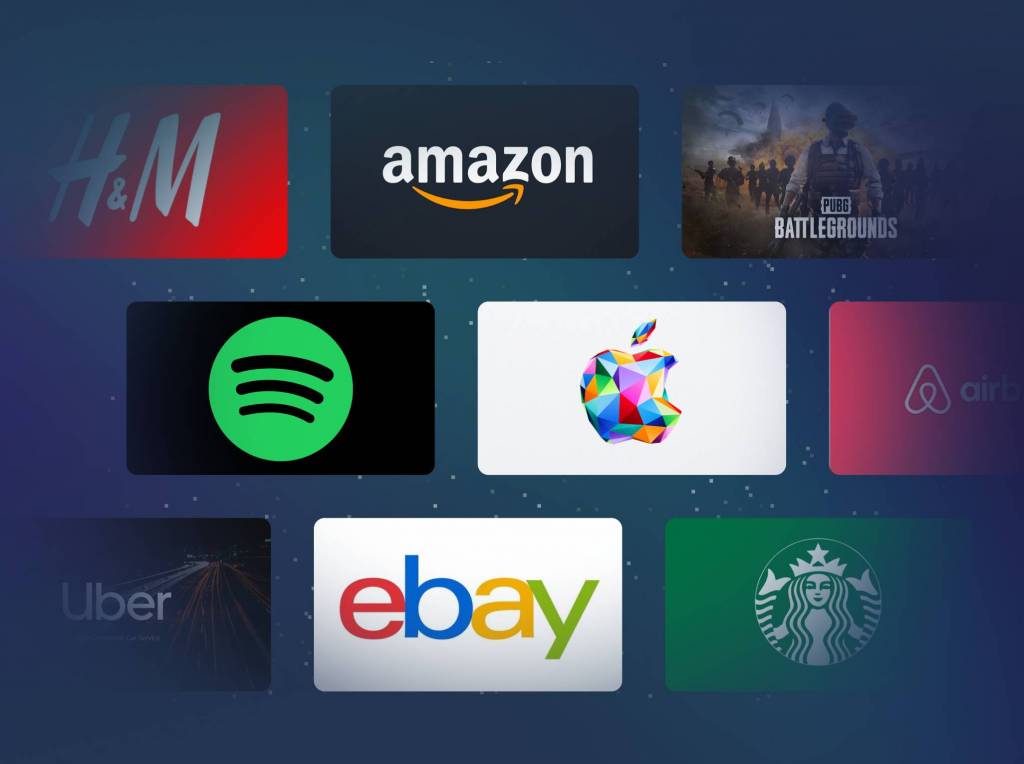
Modern gift card APIs essentially provide instant access to coalition infrastructure. When you offer customers rewards from Amazon, Starbucks, Sephora, Nike, Uber, and other major brands through a single platform, you’re delivering coalition-style variety through technology rather than individual contracts.
Reloadly’s loyalty platform catalog of 14,000+ gift card products across 140+ countries functions as ready-made partnership infrastructure. Your customers get choice. You get a strong value proposition.
Moreover, you maintain simplicity. The platform handles all the brand relationships, compliance, and operational complexity.
This approach particularly benefits B2B companies building employee incentive programs or customer referral rewards — you can offer premium brand rewards without the enterprise sales cycle typically required to establish those partnerships yourself.
4. Mobile-first and omnichannel experiences
Mobile isn’t a channel anymore. It’s the channel. Your loyalty program needs to function seamlessly in the environment where your customers actually spend their time.
77% of businesses now prioritize mobile experiences as the primary loyalty interface, the Propello Cloud research found.
But mobile-first doesn’t mean mobile-only. The best programs create truly omnichannel experiences where customers can earn rewards in-store and redeem through an app, or earn points via desktop purchases and claim rewards through SMS. The channel shouldn’t matter. The experience should flow seamlessly regardless of touchpoint.
This requires building an infrastructure that connects multiple channels without creating operational silos. The key here is APIs that integrate with existing customer systems — whether that’s your e-commerce platform, mobile app, CRM, or point-of-sale system.
When done right, friction disappears and customer lifetime value skyrockets.
5. Gift cards as premium loyalty currency
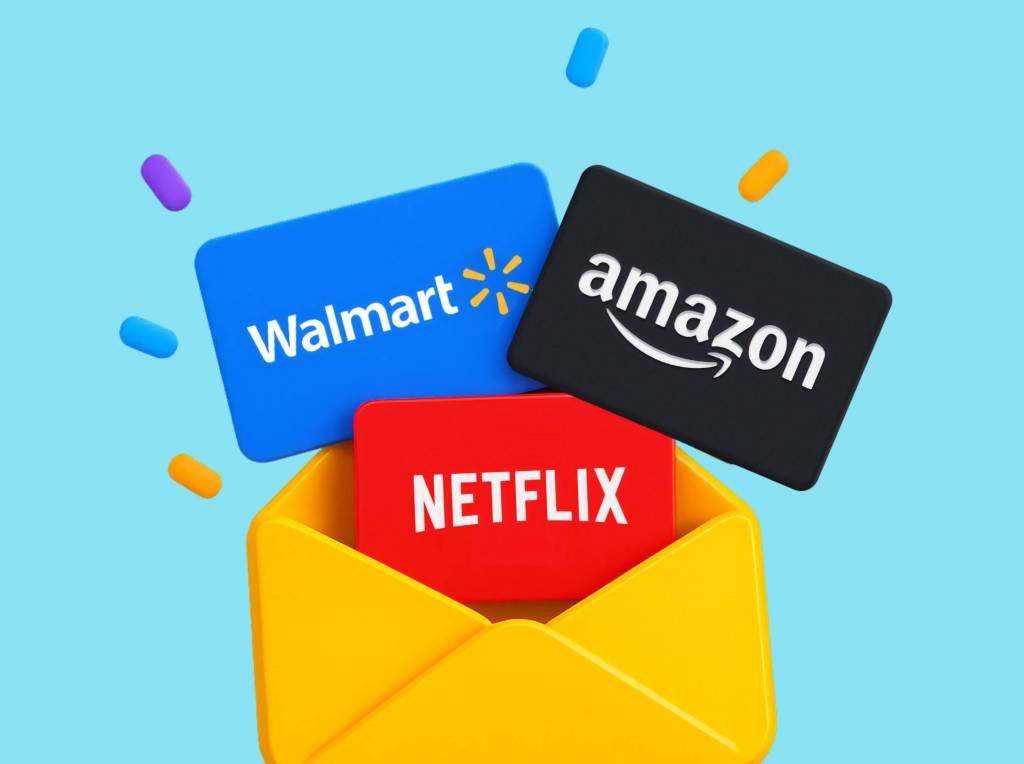
Gift cards have evolved to become premium loyalty currency. They combine universal appeal with individual choice, eliminate operational complexity, and deliver perceived value that exceeds face value.
The numbers tell the story. The gift card industry is set to quadruple in the next seven years, driven largely by B2B adoption for employee incentives and customer loyalty programs.
81% of American consumers purchased a gift card in the past year, according to research from TSG and the Bank of America, a 6% increase year-over-year. The report also highlights that 23% of consumers plan to spend more on gift cards this year than last year, with Millennials and Gen Z leading the way.
Employee gift cards are popular too: 85% of employees feel gift cards make a great workplace gift/incentive, a previous Carat report shows.
And for businesses, digital gift cards solve major operational headaches. Scalable pricing. No inventory warehouses. No shipping logistics. No dealing with damaged goods or returns. No international customs complications.
And what more? Easy implementation in as little as one day.
Building a gift card strategy with Reloadly
With Reloadly’s Gift Card API, businesses can automate bulk gift card orders, accessing everything from local retailers to global brands through a single integration.
The platform’s dashboard lets you manage campaigns, track redemption, and analyze which reward types drive the best engagement — all without touching individual transactions.
The customization possibilities extend beyond simple denomination selection. Corporate branding, personalized messaging, and scheduled delivery transform gift cards from transactional rewards into meaningful recognition moments that strengthen emotional loyalty and customer relationships.
6. Telco loyalty programs leveraging mobile top-ups
Telecommunications operators have pioneered some of the most effective loyalty innovations by turning connectivity into reward currency.
Mobile top-ups and data bundle rewards work brilliantly because everyone needs them. Unlike niche rewards that appeal to specific demographics, airtime and data have universal utility. People value what they actually use.
Every customer with a mobile phone immediately understands the value. This makes telco loyalty programs particularly effective at driving consistent engagement.
But this trend extends beyond telcos themselves. What’s interesting is that non-telecom businesses can just as well adopt this strategy.
The fastest, easiest API to top-up Airtime globally
Reloadly’s Airtime API connects businesses to 800+ mobile operators globally, enabling any company — not just telecom providers — to offer airtime and data bundle rewards.
Research on airtime rewards shows they’re particularly effective in markets where prepaid mobile services dominate and customers actively manage connectivity budgets. The practical utility drives higher perceived value compared to abstract points that might expire unused.
This represents one of the most actionable loyalty program trends in 2026 for businesses looking to optimize their reward offerings with something genuinely useful.
7. Tiered programs that drive status and progression
Customer behavior isn’t that complex. We’re hardwired to pursue status and achievement. Tiered loyalty programs tap into this psychology, creating progression pathways that motivate increased engagement and repeat business.
The mechanics are straightforward. Customers start at a base tier and unlock progressively better benefits — higher reward rates, early access, loyalty experiences, cashbacks — as they increase their engagement.
What makes this extra powerful is the visible status component. These tiers become social proof and personal achievement markers. Who doesn’t want to show off their platinum card?
Airlines perfected this gamified model decades ago, but it works across industries. Retailers use tiers to drive larger basket sizes. Hotels use them to increase direct bookings. Subscription services use them to reduce churn at renewal time.
74% of customers increase their brand interactions when offered higher status levels, Propello research showed. The gamification creates a self-reinforcing engagement loop.
The key is making tier progression achievable but meaningful. Set the thresholds too high, and customers disengage because advancement feels impossible. Set them too low and the tier status loses its prestige value.
Hit the sweet spot, and you’ll increase emotional connection to your brand while guaranteeing repeat purchases.
And how to implement a tier system? Modern API platforms enable automated tier-based reward differentiation. When a loyal customer reaches a higher tier, the system can automatically increase their perks – no manual intervention needed. This makes tier programs operationally viable.
8. Subscription and premium loyalty models
Free loyalty programs are getting company. Paid membership models that offer immediate high-value benefits are reshaping what are the new trends in customer loyalty.
The upfront payment creates powerful commitment psychology. People who pay for loyalty engage more deeply because they need to justify their investment.
This model works particularly well when the immediate benefits are clear and compelling. Airlines sell club memberships with lounge access and priority boarding. Uber provides subscription loyalty that includes lower rates and priority treatment.
Though not every loyalty program should charge for participation, a premium tier can capture additional revenue while delivering enhanced experiences to your best customers.
9. Sustainability and purpose-driven rewards
Values matter – and so does the advocacy of these values. Particularly to Gen-Z customers, but increasingly across demographics.
Loyalty programs that align with personal values create emotional connections beyond transactional relationships.
Propello Cloud’s research found that 52% of businesses now integrate sustainability into loyalty strategies.
Some programs let customers donate rewards to environmental causes or offset carbon emissions with points. Other loyalty programs build purpose into reward selection itself, featuring brands with strong sustainability credentials.
The skepticism around greenwashing means authenticity matters enormously. Customers can spot performative environmentalism quickly. Purpose-driven loyalty needs to connect to genuine company values and measurable impacts.
10. API integration and composable loyalty architecture
What’s the difference between a loyalty program that scales and one that breaks down when new customers finally join? Its technology infrastructure.
The loyalty platforms of 2026 are built on composable architectures.
Businesses now assemble best-of-breed components: a CRM for customer data, specialized analytics tools for insights, flexible APIs for reward delivery, and marketing automation platforms for communications.
This modular approach offers massive advantages. Faster deployment. Lower switching costs. Ability to adopt new capabilities without replacing entire systems. Integration with tools you already use rather than forcing migration to new platforms.
But here’s the challenge: 93% of teams struggle with API collaboration, according to API repository Postman’s annual report, leading to duplicated work, delays, and degraded quality.
This is where developer-first platforms make a difference.
APIs designed with clear documentation, SDKs in multiple programming languages, webhook support for real-time notifications, and responsive developer communities reduce integration complexity dramatically.
Reloadly’s developer-first philosophy
Reloadly exemplifies this developer-first philosophy. Our comprehensive API documentation, SDKs, and integration widgets let businesses embed gift card and mobile top-up reward capabilities into existing customer experiences in days rather than months.
The platform connects to your current systems rather than requiring customers to leave your ecosystem to redeem rewards.
For technical teams evaluating loyalty infrastructure, key capabilities matter: RESTful API design, strong authentication and security, generous sandbox environments for testing, clear error handling, and responsive support when integration challenges arise.
Build your loyalty advantage with the right infrastructure
These ten trends in loyalty programs build on three fundamental shifts: personalization that treats each customer as unique, instant value delivery that respects their time, and technology integration that makes sophisticated programs accessible regardless of business size.
The customer loyalty trends we’ve explored — from AI-powered personalization to telco rewards and composable architecture — represent shifts in behavior and expectations, not temporary fads.
Companies not implementing these initiatives will soon fail in meeting employee and customer expectations.
But implementing these trends requires platform infrastructure capable of delivering diverse rewards instantly across markets and audiences.
Sounds difficult? Most businesses don’t actually need to build this infrastructure themselves. They need to access it through the right API partner.
Reloadly provides the all-in-one platform that powers modern loyalty programs with instant gift card API access, seamless mobile top-ups, a unified dashboard for managing digital payouts, and developer-first integration.
Reloadly functions as loyalty infrastructure handling global reward delivery, compliance across jurisdictions, and operational complexity – so you can focus on loyalty strategy and building customer relationships.
[Register with Reloadly to start building a loyalty program immediately with no monthly minimums and no long-term contracts — evaluate the platform’s fit for your loyalty strategy risk-free.]