
Most gift card incentive programs feel the same. Buy something. Get a discount. Forget about it a week later.
But every so often, a company hands you a small reward that actually feels personal. It might be a coffee card that brightens a dull morning, or a digital voucher that saves you from overspending during the holidays.
These small moments matter. They leave a stronger impression than points or coupons because they feel earned.
That emotional response is exactly why gift card incentive programs keep growing. Customers and employees remember them and use them, and in 2026, companies are putting them to work in far smarter ways than they did even a year ago.
Digital delivery has removed friction. More brands across retail, beauty, food, travel, wellness, tech, entertainment, gaming, and social impact have become familiar gift card rewards. Even niche ideas, like cookout certificates or nail salon cards, hold value for the right recipients
This guide walks through 25 practical types of gift card incentive programs your company can use in 2026 to shape better customer behavior and retain top employees. You’ll see where they fit, who responds to them, and why some outperform traditional discounts and loyalty points.
A great gift card incentive program will increase customer and employee motivation. Contact us to find out how by booking a demo and signing up for our newsletter.
25 gift card incentive program ideas to increase engagement in 2026
Category 1: Retail & shopping incentive programs
1. Amazon customer reward programs
Amazon continues to perform well because customers and employees trust it and know they’ll find something that matches what they’re looking for.
Companies rely on these cards to reward people for purchasing products and leaving reviews. They’re also a great tool for attracting new customers.
Amazon’s familiarity makes people more willing to participate, and the sheer variety inside Amazon’s catalogue helps keep the reward personal without needing to deeply understand specific tastes.
“Amazon offers tremendous value for its program, including free shipping, Prime TV, and more, which by itself is worth paying for,” says Shep Hyken, a customer service and CX expert, speaking to Forbes.
2. Visa and MC prepaid incentive cards
Prepaid Visa and MC rewards offer a level of autonomy that customers and employees genuinely appreciate. They function as open-loop cards, which means they can be used almost anywhere, unlike closed-loop cards tied to a single retailer.
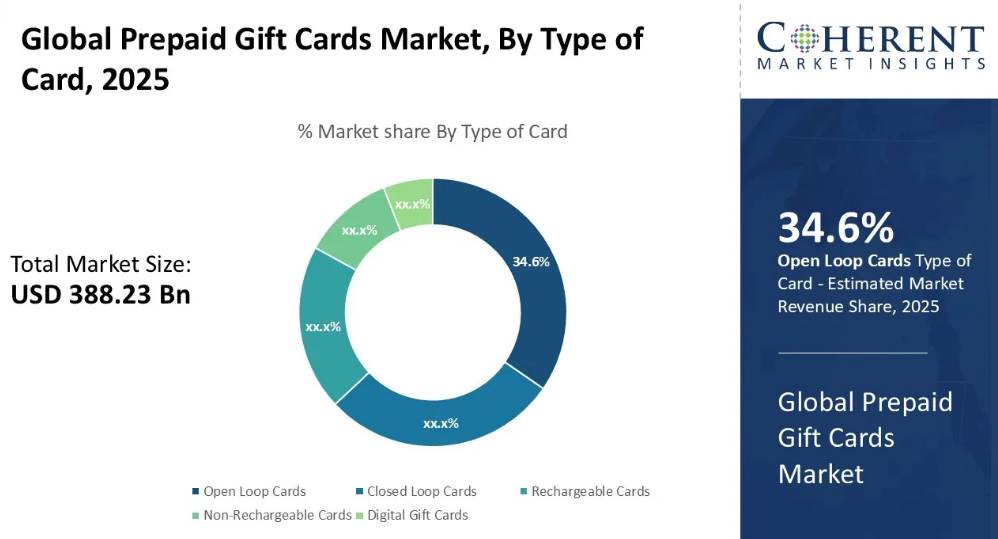
This open-loop vs. closed-loop distinction matters, especially for diverse audiences with varied tastes. Recent market data shows that open-loop cards held 34.6% of all prepaid gift card revenue in 2025, making them one of the most in-demand formats globally.
The Global Prepaid Gift Cards Market (2025)
Source: Coherent Market Insights
People gravitate toward these prepaid cards because they can apply the value to whatever feels most useful in the moment, and that freedom strengthens their connection to the brand offering the reward.
Companies lean on this format when they want a wide-reaching incentive that doesn’t require detailed knowledge of each customer’s tastes.
3. Seasonal retail incentives: Christmas gift cards and Valentine’s Day gift cards
Seasonal gift cards resonate because they arrive at moments when people naturally make purchases or seek small comforts.
Christmas gift cards help brands re-engage customers and employees during high-volume shopping periods, while Valentine’s Day gift cards work well for beauty and relationship-driven campaigns. Just think of how crowded decision-making becomes during peak shopping weeks.
People typically respond warmly to seasonal gestures, and this kind of perk creates a sense of ease during times when spending already feels top-of-mind.
Seasonal sales incentives also work well as holiday gifts for employees, especially when companies want to show employee appreciation without defaulting to generic bonuses.
4. Department store gift card promotions
Walk into a typical department store, and you’ll see a wide variety of apparel, home goods, accessories, and special-occasion items. A gift card embodies this selection, making it a hit with many audience demographics.
Customers often redeem them quickly because the stores already fit into their regular shopping routines, while brands can use them to support new product launches or encourage people to explore categories they haven’t purchased from yet.
5. Segment-based incentives: best gift cards for men, women, teenagers, and kids
Targeted incentives feel more thoughtful because they match the recipient’s identity and interests.
The best gift cards for men often include sports, tech, or home improvement brands. Gift cards for women, meanwhile, may lean toward beauty, wellness programs, or fashion. Brands should be careful not to lean too heavily into gender stereotypes, though, and use gender as a starting point, not a fixed rule.
Gift cards for teenagers thrive in entertainment, apparel, and digital gaming, and the best gift cards for kids spark imagination through toys, crafts, and creative tech.
Segmenting rewards like this helps brands target specific motivations more accurately, creating incentives that feel natural rather than forced.
Category 2 – Food, beverage, and hospitality programs
6. Coffee shop gift card incentives
Physical gift cards for coffee bring a small sense of comfort that customers and employees rarely ignore. They work well as thank-you gestures after a purchase, bonuses for survey participation, or quick responses when a brand wants to smooth over a support issue.
The cost stays manageable, yet the emotional return is strong, which makes this one of the most reliable tools for day-to-day customer connection. A simple coffee card often leaves a longer impression than expected.
7. Cookout gift certificates
Summer and outdoor promotions are a tried-and-tested marketing strategy, and cookout gift certificates tick several boxes here, including social events and a sense of togetherness.
Giveaways and local engagement events are excellent settings for these incentives, which help people associate the brand with relaxed and enjoyable moments.
They also work well for families and community-focused audiences who value practical rewards with a social element.
8. Restaurant group gift cards
Most people enjoy eating out, and these gift card options resonate with those needing a break from cooking or simply a convenient way to cash in rewards.
They’re also flexible for companies, which can use them for a whole host of initiatives, including push referrals or major purchase milestones.
This category succeeds because the reward supports an everyday need without pushing customers toward a specific product. A single meal out feels like a genuine treat, and that feeling helps strengthen ongoing trust between the customer and the brand.
9. Hotel and travel gift certificate incentives
The cost of vacations is going up, so travel-related rewards are a smart incentive for customers and also work as an employee rewards initiative.
Hospitality brands, booking platforms, and travel-related businesses use them to encourage return visits, support loyalty tiers, or influence high-value decisions during peak seasons.
Customers often redeem these cards quickly because they connect to upcoming plans or long-desired trips. Even modest amounts make a memorable impact and explain why these cards play an outsized role in customer engagement – 84% of loyalty and rewards programs offered travel-related perks, according to recent research by travel tech company Arrivia.
Category 3 — Beauty, health, and wellness incentives
10. Nail salon gift cards
Nail salon gift cards add a small spark of pleasure to an incentive program. They remind the recipient that rewards don’t always need to be grand to feel meaningful.
Brands use them to help people pause, reset, or enjoy something gentle during a chaotic week. The reward feels intimate in a way that points never do. When customers associate your brand with that pause, they tend to stay engaged for longer stretches.
11. Spa and wellness gift card incentives
Spa and wellness rewards carry a sense of restoration that people latch onto quickly.
These cards support campaigns built around care, balance, and personal reset. They feel generous without being excessive, which helps customers view the brand in a warmer light. The experience encourages them to slow down and treat themselves, making the incentive feel supportive rather than sales-driven.
12. Fitness and sports retail gift cards
Fitness and sports gift cards are a hit because they tap into the growing interest in health, wellness, and active lifestyles over the last few years. The global health and fitness market is set to pass $200 billion by 2030 (up from $112 billion in 2023), according to data from Fortune Business Insights.
They work well as holiday gifts, as January is when many people feel motivated to take up a new physical pursuit as they aim to shed a few festive pounds. The reward nudges them toward a goal they already care about, which prevents it from feeling forced.
Brands benefit because the incentive taps into personal momentum rather than creating it from scratch, and that usually leads to stronger follow-through.
Category 4 — Entertainment, gaming, and digital rewards
13. Streaming service gift cards
Streaming incentives fit naturally into daily life, particularly over winter, where the appeal of watching a movie or series in a warm living room is particularly strong.
Customers and employees treat them as a small break from noise, not another marketing effort. When a brand offers a month of entertainment as a bonus or thank-you, it shifts the interaction into a calmer, more enjoyable space.
The reward lands quickly and feels light, which helps people reconnect with the brand without feeling pressured.
14. Gaming gift card incentives
Gaming gift cards speak directly to audiences who thrive in digital worlds. They help companies meet teenagers and young adults where they already spend time and increase the chances of capturing youthful audiences that could stick with them for decades.
According to a recent Pew Research survey, 85% of teens say they play video games, and about 41% do so daily.
The Popularity of Video Games Among US Teenagers
Source: Pew Research Center
The immediacy of redemption sparks excitement and makes the reward feel alive rather than static – it also suits the on-demand habits of the younger crowd.
Players use these cards to upgrade experiences they genuinely enjoy, which deepens the emotional imprint of the incentive. Brands that lean into this format tend to see rapid engagement without heavy persuasion.
15. App store and digital gift cards
App store and digital cards appeal to customers and employees who like choosing their own tools, games, or media, and prefer to shop online rather than in-store.
They support quick-turn campaigns because delivery is instant, and the reward slides easily into habits people already have. The autonomy they provide helps the incentive feel respectful rather than prescriptive.
Brands gain a quiet form of goodwill when the recipients realize the reward slots neatly into their daily life.
Category 5 — Lifestyle, experiences, and hobbies
16. Movie theater and music event ticket gift cards
Like restaurant and spa gift cards, a reward card for movies and music events gives customers and employees something to look forward to, but with one key difference: the experience is shaped by a specific moment in time, not whenever the recipient feels like going.
These cards are great for a brand to link itself to a big cultural event. The experience is shareable, which widens the emotional impact beyond the individual who received the reward. It also shifts the brand’s presence into a setting that feels enjoyable and low-stress.
17. Outdoor and adventure gift card programs
Outdoor and adventure rewards inspire customers and employees to step into something slightly outside their normal routine. They appeal to people who crave fresh air or exploration.
These incentives often support seasonal product lines or wellness-driven campaigns where movement is encouraged. They also leave the recipient in a refreshed mood, which often reflects positively on the brand that made the moment possible.
18. DIY and home improvement gift card incentives
DIY and home improvement cards appeal to people who enjoy building, repairing, or refreshing their space. These incentives help people finally start projects they’ve been putting off – a common bugbear.
When a brand nudges someone toward meaningful progress at home, the relationship deepens. Customers and employees remember that support, especially when the reward helps turn a small idea into something useful or satisfying.
Category 6 – Social impact and CSR gift certificate incentives
19. Charitable donation gift cards
Charitable gift cards allow the recipient to send support to a cause they already believe in, which adds intention and purpose to the reward. Instead of choosing a charity on their behalf, the brand steps back and gives people room to decide what feels meaningful.
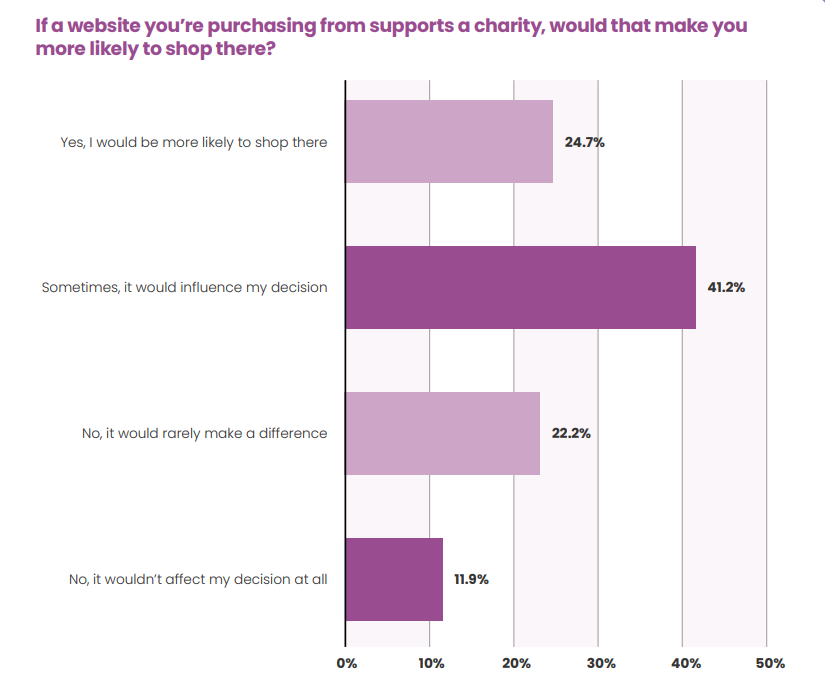
That autonomy carries weight. People often feel seen when a company gives them this kind of choice, and the gesture helps the brand express its values without grand statements or heavy messaging. It also chimes in with public sentiment toward charity-supporting brands – almost two-thirds (65.9%) say they’d be more likely to buy from such a company, according to the UK E-Commerce Association.
How Customers Value Charity-Supporting Brands
Source: UK E-Commerce Association
20. Donation-match incentive programs
Donation-match incentives turn a single act of giving into a shared effort. When a company matches the customer or employee’s contribution, it signals that the brand wants to participate rather than simply observe.
The result? A warmer emotional tone that resonates strongly with audiences who care about social responsibility. It also builds trust, because the company demonstrates commitment through action instead of claims, and that authenticity tends to support longer-term loyalty.
Category 7 – Retention, loyalty, and lifecycle incentive programs
21. Loyalty tier bonus gift cards
Tiered programs work best when progress feels tangible. A well-timed gift card gives people something real to hold onto as they move upward, turning what can feel like a distant promise into an immediate reward.
It also shifts how the program feels. Instead of climbing through a system that can come across as mechanical, card-holders receive a moment of recognition that feels directed at them.
A beauty retailer, for instance, might surprise a mid-tier member with a small digital card right before a seasonal launch, nudging them to stay active without applying pressure.
These small, timely gestures help customers and employees see each tier as something worth reaching.
22. Customer milestone gift card programs
Milestone rewards land well because they arrive during moments that already carry personal importance.
A small gift on a birthday, subscription anniversary, or long-term usage moment feels like a gentle tap on the shoulder. It reminds people that the brand is paying attention without asking for anything in return.
That softness helps build trust, and trust often creates stronger retention than aggressive promotional tactics.
23. Referral gift card promotions
Referral incentives work because they reinforce a social action customers and employees have already taken.
When someone recommends a brand to a friend, they’ve put a piece of their own reputation on the line.
A digital gift card acknowledges that effort immediately. The quick reward strengthens the person’s confidence in their decision to advocate for the brand and often encourages them to repeat the behavior.
Category 8 – Digital-first, automated, and bulk-friendly incentives
24. Real-time digital gift cards delivered by SMS or email
Real-time rewards change how people experience incentives because they arrive at the exact moment enthusiasm is highest. When a customer completes a purchase, shares a review, or reaches a milestone, an immediate egift card feels like a natural extension of that action.
SMS and email delivery fit smoothly into the way people already communicate, which helps the reward land without hassle or delay.
This format also works well inside employee incentive gift card programs, where instant recognition after standout contributions or work anniversaries provides real motivation. The quick turnaround keeps momentum alive and encourages people to repeat the behavior that triggered the reward.
“Digital gifting is quickly becoming an increasingly popular option among customers looking to show appreciation in thoughtful ways that don’t break the bank,” says Peter Vogt, Co-Founder & CEO of Prepaid2Cash, a gift card redemption app. “It offers convenience, security, and time and cost savings for customers, and for businesses, it can drum up business and encourage existing customers to spend more.”
25. Automated multi-denomination incentive programs
Automated systems let brands match the size of the reward to the importance of the action, which creates a sense of balance that customers and employees tend to trust. A small denomination might encourage a follow-up action, while a higher amount can support renewals or major purchases.
The system adapts quietly in the background, reducing manual work while still feeling personal. Many companies automate these setups for both customer-facing campaigns and internal employee recognition, since the same logic applies: the reward should fit the moment.
This structure helps customers and employees feel that the brand is paying attention rather than handing out uniform incentives that lack context.
Let the reward fit the person
No two customers or employees respond to the same reward in the same way. Giving people the option to choose their own gift card removes that tension and keeps the gesture personal.
Reloadly supports that choice with a user-friendly global rewards platform that handles global distribution, real-time delivery, and large-scale campaigns without added complexity.
You stay in control of spending. Recipients stay in control of the reward.
Ready to build a gift card incentive program fit for 2026? Contact us to book a demo and find out how Reloadly can help boost engagement across your organization.