
Most companies don’t struggle to reward employees – they struggle to reward them well. In 2026, employee incentive ideas that actually work look very different from the one-size-fits-all bonuses and branded swag of the past. Today’s teams are more distributed, more diverse, and more vocal about what they value at work.
That means incentives must do more than say “thanks”. They need to:
- Support specific employee needs
- Reinforce company culture
- Drive the behaviors that move business goals forward.
The challenge? What motivates a sales team won’t resonate with engineers or frontline staff. Also, employee incentive programs for a small business won’t always scale across a global workforce.
This guide breaks down employee incentive ideas by industry, showing how modern rewards can help engage, motivate, and retain your top talent, without making things more complex for HR teams.
You’ll find practical, flexible reward ideas designed for how people actually work today, plus guidance on delivering incentives instantly and at scale.
Keep reading to build an incentive strategy your team won’t forget.
We’ll cover:
- What are employee incentive programs?
- Do employee incentive programs work?
- 35 employee incentive ideas that will raise productivity
- How to create an employee incentive program for your business
Want to deliver a top-tier employee incentive program in 2026? Contact us to find out how Reloadly’s rewards are fit for a world-class workforce.
What are employee incentive programs?
Employee incentive programs are structured initiatives designed to reward employees for specific behaviors or achievements that support company goals. When done well, they help motivate employees and reinforce positive behaviors – they also improve employee engagement across teams.
These programs typically fall into two categories. Financial incentives include monetary rewards like bonuses, profit sharing, gift cards, or stipends.
Non-monetary incentives, meanwhile, focus on recognition and well-being, such as flexible work options, professional development opportunities, public recognition, or health-focused benefits.
Incentives can also be short-term, like on-the-spot rewards for great work, or long-term, such as stock options or career development benefits that support retention.
Yet it’s not just performance that effective employee incentive programs influence. They also help shape company culture and increase employee morale, especially when rewards feel timely, relevant, and fair.
Do employee incentive programs work?
It’s a fair question, and one many human resources leaders ask after seeing incentive initiatives fall flat. With only 21% of employees globally engaged at work, according to 2025 Gallup research, it’s clear that generic or poorly timed rewards aren’t enough.
The Drop in Global Employee Engagement
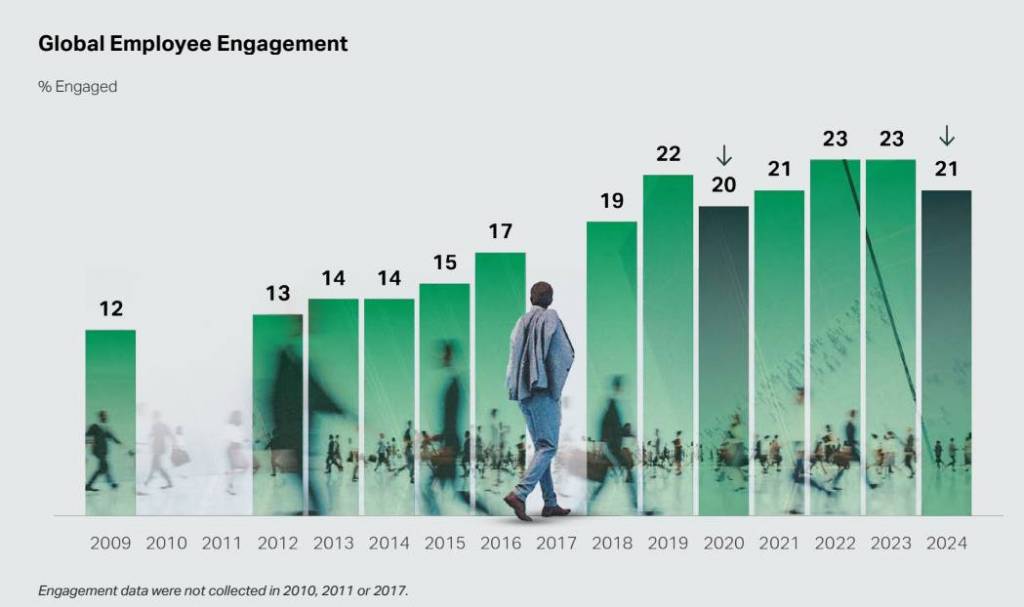
Source: Gallup
Employee incentive program ideas offer a way to engage directly with teams, but only when they’re designed to reinforce the right behaviors and delivered in ways that feel meaningful to team members.
Such programs are a great way for organization to show their staff they care. “When people feel their leaders genuinely care about them, they report higher levels of happiness, engagement, and productivity,” says Soni Basi, Ph.D., a HR consultant writing for Forbes. “ In turn, organizations may see reduced turnover and enhanced workplace morale.”
They’re most effective when incentives are clearly tied to measurable metrics, whether that’s performance targets, milestones, or behaviors that support business goals.
Timing also matters. Recognition delivered close to the achievement carries far more impact than rewards that arrive weeks later. Programs that offer choice, such as flexible rewards, digital gift cards, or varied perks, also tend to drive higher employee satisfaction because they respect individual tastes.
Where incentives fail is equally clear. Generic, one-size-fits-all rewards rarely motivate a diverse workforce. Delayed recognition, for example, weakens the connection between effort and reward, while unclear goals leave employees guessing what success actually looks like.
The bottom line is that timely and relevant incentive programs lead to increased productivity. Staff are much more likely to feel higher job satisfaction, which also helps keep employee retention high.
When done well, incentives are a real performance driver rather than a box-ticking exercise.
35 employee incentive ideas that will raise productivity
The most effective employee incentive programme examples don’t follow a single template – they reflect how different teams actually work. A reward that motivates a sales rep won’t land the same way with an engineer or a support agent.
The sections below break down practical incentive ideas by role and industry, explaining why they work, what behaviors they encourage, and whether they’re monetary or non-monetary, so you can apply them where they’ll have the biggest impact.
Customer support and call centers
1. Mobile top-ups
Mobile top-ups are a practical incentive for call center and support teams that rely heavily on their phones. With these, companies reward performance with something employees use every day, rather than abstract perks.
This approach works especially well for remote or international teams, where traditional employee benefits vary.
Example: Agents who meet monthly CSAT targets receive instant mobile airtime top-ups.
2. Peer recognition programs
Peer recognition gives support teams a way to highlight great work as it happens.
Colleagues often see effort and collaboration that managers miss, especially in busy environments. When recognition comes from peers, it feels more personal and builds a stronger team culture the longer the team works together.
Example: Team members nominate peers weekly, with winners receiving small digital gift cards.
3. Team-based rewards
Customer support depends on teamwork, which makes shared rewards especially effective.
Team-based incentives shift attention away from individual speed metrics and toward shared outcomes like service quality. They also reduce unhealthy competition and encourage collaboration during high-volume periods.
Example: A team that maintains SLA targets for a full month earns a shared experience voucher at a local restaurant or team activity venue.
4. Wellness stipends
Support roles can be emotionally demanding, so wellness incentives are a thoughtful reward.
Stipends that cover fitness, mental health, or well-being tools show long-term care rather than short-term pressure. Employees often value this support more than cash alone, especially during intense periods.
Example: High-performing agents receive monthly wellness credits for gym membership or mindfulness apps.
5. PTO bonuses for consistency
Extra paid time off (PTO) is one of the most appreciated rewards in call centers, so a PTO bonus that recognizes reliable and consistent work is an excellent move.
This incentive supports work-life balance while still rewarding strong performance, making it a simple but effective retention tool.
Example: Agents with perfect quarterly attendance earn an additional paid day off.
Technology and engineering
6. Professional development opportunities
Learning-focused incentives work particularly well for technical teams who care about long-term growth.
Training budgets, certifications, or access to specialist courses feel meaningful because they directly help them improve their career prospects.
These rewards also benefit the company by improving internal skills and confidence, rather than offering a short-lived boost.
Example: Engineers who complete a major release receive credits for certifications or online courses.
7. Tuition reimbursement
Tuition reimbursement encourages engineers to deepen their expertise without carrying the full financial burden.
Retention of these specialist workers is likely to increase here as the reward shows trust in them and a commitment to their long-term growth.
Skilled teams tend to value structured learning rewards more than one-off bonuses, especially when eligibility rules are clear and fair.
Example: Developers receive partial reimbursement for accredited computer science or data programs.
8. Stock options or profit sharing
Equity-based incentives help engineers feel connected to the company’s long-term success.
Stock options or profit-sharing are a reward for continuous contributions over short-term output, which lines up well with product and infrastructure work.
These incentives also encourage ownership thinking and often play a role in retaining senior technical talent.
Example: Engineers receive annual profit-sharing payouts based on overall company performance.
9. Flexible schedules
Many technical roles require deep focus, and allowing autonomy over working hours helps keep productivity and morale high. That’s where flexible work schedules prove valuable – they reward trust rather than output volume.
This incentive often carries high perceived value while costing little to implement, making it especially attractive for engineering teams.
Example: Teams that hit delivery milestones unlock flexible start and finish times.
10. Milestone-based bonuses
Milestone-based bonuses suit long-term technical work. Rather than rewarding speed alone, they recognize completion, stability, and quality.
Clear milestones help teams stay aligned while avoiding rushed delivery or burnout.
Example: A product team earns a bonus after successfully launching and stabilizing a new feature.
Marketing and creative teams
11. Experience-based rewards
Experiences tend to resonate more than cash with creative teams. Think event tickets, travel vouchers, or curated experiences: these feel personal and memorable, especially after demanding campaign periods.
These rewards also create positive associations with success that last longer than a standard bonus.
Example: Campaign leads receive digital travel or event vouchers after exceeding performance targets.
12. Company-wide public recognition
Marketing work often supports multiple teams, which makes public recognition especially powerful.
Sharing wins across the company spreads goodwill and motivates other employees. When recognition is visible, it increases morale and encourages collaboration beyond the marketing function.
Example: High-performing campaigns are highlighted in all-hands meetings alongside digital rewards.
13. Conference or event stipends
For many marketers, getting out of the day-to-day matters just as important as hitting numbers.
Conference and event stipends reward strong performance with exposure to new ideas, tools, and people. They give creative teams space to reset, learn, and bring fresh thinking back into the business, which often pays off long after the event itself.
Example: A marketer who exceeds quarterly lead targets earns a stipend to attend an industry conference of their choice.
14. Flexible work perks
Creative work doesn’t always happen on a fixed schedule, and incentives that reflect that reality tend to land well.
Flexible work perks give teams breathing room after intense delivery periods and help maintain momentum without burnout. These rewards feel earned, not imposed, which makes them especially effective for retention.
Example: A team that delivers a major campaign early unlocks flexible hours or additional remote days for the following month.
15. “Choose your reward” pools
Creative teams are rarely motivated by the same thing, which makes choice-based incentives a strong option.
Instead of guessing what people want, companies offer a curated selection and let employees decide. This keeps rewards relevant without making them more complex, and it avoids the disappointment of a perk that misses the mark.
Example: Campaign contributors choose between digital gift cards, experiences, or wellness program credit.
Operations, logistics, and on-site teams
16. Attendance-based incentives
Showing up consistently keeps operations running, but it often goes unnoticed.
Attendance-based incentives recognize reliability without turning it into a punitive metric. When structured clearly, these rewards feel like appreciation rather than enforcement, which makes them more effective in the long run.
Example: Employees with strong monthly attendance receive a small digital gift card as recognition.
17. Safety milestone rewards
Safety incentives work best when they reward habits, not just outcomes.
Milestone-based rewards encourage teams to stay alert, follow procedures, and look out for one another. Over time, these incentives help embed safety into daily routines rather than treating it as a compliance checkbox.
Example: A warehouse team earns a shared reward after completing a set period without incidents.
18. Health insurance upgrades
Health-related incentives resonate strongly in physically demanding roles.
Upgraded health coverage as a reward is an extremely useful perk that sends a clear message that employee well-being matters beyond short-term output. These incentives often carry more weight than cash because they reduce long-term stress and uncertainty over health.
Example: High-performing shifts qualify for enhanced health insurance benefits.
19. Shift preference or schedule priority
For on-site teams, when you work can matter just as much as what you earn.
Schedule-based incentives reward reliability by giving employees more control over preferred shifts or rotas.
This type of reward feels practical, fair, and highly relevant to day-to-day life, without adding cost and complications.
Example: Employees with consistent performance earn priority access to preferred shifts or rotas for the next scheduling period.
20. Team-building experiences
On-site teams rely on trust and coordination, which makes shared rewards especially meaningful.
Team-building incentives create space for connection outside routine tasks and help strengthen working relationships. These rewards are most effective when tied to collective wins rather than individual output.
Example: A logistics team that exceeds throughput goals earns a group experience or activity voucher.
Small businesses and startups
21. Low-budget digital gift cards
Small teams don’t need big budgets to make incentives feel meaningful. Digital gift cards work well because they’re quick, flexible, and easy to manage without dedicated HR systems.
When rewards arrive close to the moment of achievement, even modest amounts can carry real impact.
Example: A founder sends small digital gift cards to recognize weekly wins or standout effort.
22. Referral bonuses
Hiring through referrals often brings in stronger cultural fits because you get ready-made candidates who are already vouched for by existing top performers. They also give employees a reason to help grow the team.
These rewards feel tangible because they connect personal networks with company success. For small businesses, referrals also reduce hiring costs and time.
Example: Employees receive a digital cash card when a referred hire passes probation.
23. Non-monetary incentives
In early-stage companies, recognition and opportunity tend to have a bigger impact on employee motivation than cash,
Non-monetary incentives like visibility, responsibility, or learning opportunities help leaders show that they trust and value staff. These rewards build culture without stretching limited budgets.
Example: A high-performing team member is invited to lead a new initiative or mentor others.
24. Recognition programs
Simple recognition goes a long way in small teams where effort is highly visible.
Doing this regularly not only shows managers they acknowledge hard work, but it also helps drive shared values and keeps morale high during tough periods. Consistency matters more than scale here.
Example: Monthly “best employee” recognition includes a small digital reward and a public shoutout.
25. Flexible work hours
Startups often move fast, and flexibility helps teams keep pace without burning out. Flexible work hours reward trust and autonomy rather than time spent online.
This incentive often improves retention while keeping operational impact low.
Example: Teams that hit growth milestones unlock flexible start and finish times.
Remote and distributed teams
26. Work-from-home stipends
Remote work shifts certain costs onto employees, which many companies fail to acknowledge – stipends help balance that out.
Support for home office setups or connectivity feels practical and thoughtful, especially for long-term remote roles. These incentives also encourage productivity without micromanagement.
Example: Employees receive quarterly work-from-home stipends via digital payouts.
27. Utility bill credits
Covering part of everyday bills can be surprisingly meaningful. Utility credits reduce monthly pressure and feel more personal than generic bonuses.
This approach works particularly well for distributed teams across different cost-of-living regions.
Example: High performers receive digital credits toward electricity or internet bills.
28. Global gift cards
Distributed teams need rewards that work everywhere, so global gift cards remove regional barriers while keeping employee recognition consistent.
Staff members appreciate receiving rewards they can actually use, regardless of location.
Example: Team members receive country-specific digital gift cards delivered instantly.
29. Connectivity and tech upgrade credits
Remote teams depend on reliable tools, yet upgrades often fall to the employee.
Tech upgrade credits reward strong performance because they remove friction from daily work, whether that’s faster internet, better hardware, or productivity tools.
These incentives feel practical and immediately useful, especially for distributed teams working across time zones.
Example: High-performing remote employees receive digital credits to upgrade routers, headsets, or software subscriptions.
30. Work-life balance incentives
Time-based rewards often matter more than money for remote teams.
Incentives that protect downtime reinforce healthy boundaries and reduce burnout. Clear criteria ensure these rewards feel earned, not arbitrary.
Example: Teams that meet quarterly goals earn extra paid time off or flexible schedules.
Sales and revenue teams
31. Digital gift cards for fast wins
Digital gift cards give sales teams immediate recognition when momentum matters most and strengthen the link between effort and outcome.
Many HR teams find that a well-built digital gift card API reduces manual work through automating delivery. It removes the need for spreadsheets, individual purchases, and follow-ups, while giving management better control over budgets and timing with far less administrative effort.
Example: A rep who closes a same-day deal receives an instant Amazon or Nike digital gift card via a gift card API.
32. Tiered monetary rewards tied to KPIs
Tiered rewards work well when sales performance builds over time rather than in single moments.
Clear incentive levels tied to KPIs help reps see how daily activity turns into real rewards, which keeps motivation steady across long sales cycles. This structure also makes expectations easier to communicate and manage.
Teams are focused on progress, not just results, and talented employees are more likely to want to stay at a company that rewards steady contribution, not just last-minute heroics.
Example: Reps earn increasing gift card values as they hit pipeline, revenue, and quota milestones.
33. Spiffs for short-term pushes
Spiffs are useful when sales teams need a quick burst of focus. They are short-term sales incentives that help managers direct attention toward specific goals without changing long-term compensation plans.
Delivered quickly, spiffs reinforce urgency and effort in the moment. If management can use them selectively, they add energy without overwhelming teams.
Example: Every booked demo during launch week earns a €25 digital gift card.
34. Quarterly top performer awards
Quarterly awards recognize consistency, not just one strong month. They give sales teams a longer horizon to work toward and help balance out short-term fluctuations.
A smart move is to pair these awards with public recognition, which managers can do via social media channels like LinkedIn and Slack. Doing this increases their impact and demonstrates positive behaviors across the wider team.
Example: The top-performing rep each quarter receives a premium gift card and a company-wide mention.
35. Open-loop cash cards for milestones
Open-loop cash cards suit major milestones where flexibility matters most. They give the recipient complete freedom to choose where they spend their money, as opposed to closed-loop cards that are for specific brands.
These rewards feel closer to cash while remaining easy to distribute digitally, especially across global teams. High performers appreciate the freedom to spend their reward anywhere, which increases perceived value without extra complexity for HR.
Example: A rep who exceeds the annual quota receives a prepaid Visa cash card.
How to create an employee incentive program that works for your business
The best incentive programs aren’t built around rewards but intent. When a company is clear about what it wants more of, whether that’s retention, collaboration, or sustained performance, incentives stop feeling random and start reinforcing real behavior.
What matters next is relevance. People respond to rewards that fit their role, their location, and their lifestyle. A sales rep, an engineer, and a remote support agent won’t value the same thing, and that’s fine. The strongest programs reflect that diversity instead of fighting it.
This is where a unified rewards platform quietly does the heavy lifting. Digital APIs make rewards easy to trigger at the right moment, while global coverage means teams don’t get stuck offering perks that only work in one country. Instead, they get a package scheme of incentives that adapts to different roles, regions, and performance goals without creating extra work for HR teams.
Access to thousands of brands also gives employees choice without adding complexity for HR. The result is a program that feels personal on the surface, but runs smoothly behind the scenes – even as teams grow.
Employee incentives work best when they arrive quickly, feel useful, and respect how different teams operate. Get those three right, and rewards stop being an expense and start becoming a retention tool.
Want to reward top talent without slowing your team down? Contact Reloadly for a demo to find out how you can speed up productivity across your workforce.