A survey incentive is a payment a research team gives someone for completing a study, delivered as a digital gift card, a prepaid card, or credit sent straight to a mobile phone. The amount sets the response rate, the share of people contacted who take part. Delivery decides whether the person is paid at all.
NORC at the University of Chicago, a research organisation, raised a survey incentive from $2 to $5 in work published in June 2025, and watched response climb from 12.5% to 14.8%. None of that matters if the reward never turns up. People who are not paid do not come back, and the next study starts with a smaller group willing to take part.
The same test, run on people who had already ignored a national survey, put the cost of each finished response at $16.29 under the $2 incentive and $34.51 under the $5 one. Roughly double the money bought just over two points of response.
This page covers both halves of the decision: what the reward should be worth, and what has to happen for it to reach a real person in a real country.
What a survey incentive is
A survey incentive is compensation for a respondent’s time. A respondent is the person answering the survey. A completion, or a complete, is one finished response that passed the screening a research team uses to discard rushed or duplicated answers. It is the unit most research budgets are built on.
Incentives appear across every research format. Online panels, which are standing groups of people who have agreed to take part in studies over time, pay per completion. Focus groups and interviews pay more because they ask for more. Fieldwork, the stage where a study is out collecting responses, is where incentives get paid out.
The incentive is the only part of a study the respondent personally receives. Everything else, the questionnaire design, the plan for who should be reached, the analysis, is invisible to them. That makes it the part of the research operation most likely to shape whether someone takes part again.
How much should a survey incentive be?
A survey incentive should be sized to the effort the study asks for, because the amount moves response rates and cost in opposite directions. The June 2025 test by NORC at the University of Chicago is a clean illustration. Moving from a $2 incentive to a $5 one lifted response from 12.5% to 14.8%. It also took the cost of each finished response from $16.29 to $34.51. That is 2.3 extra points of response, at roughly twice the price.
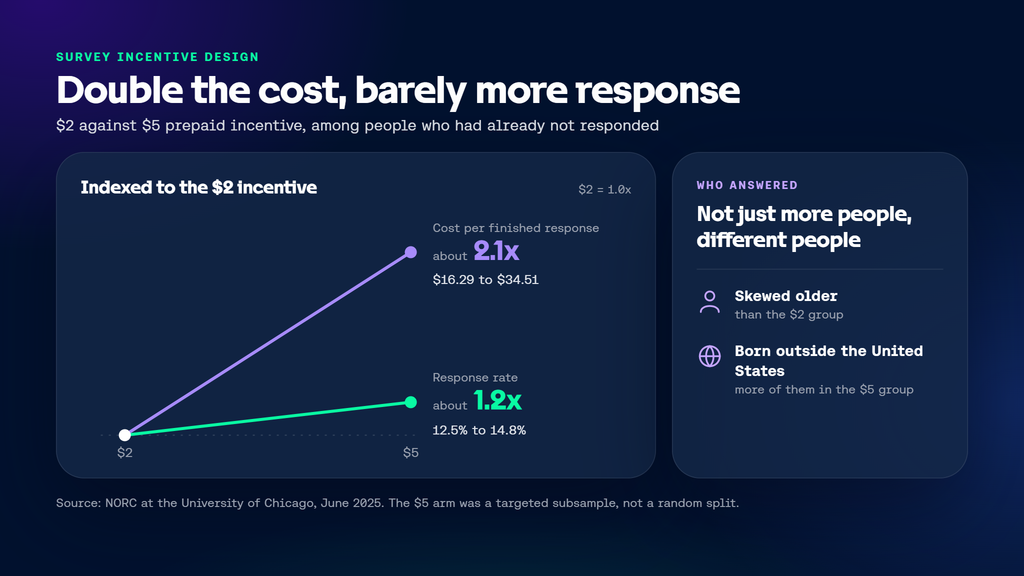
That tradeoff is the whole design problem. A higher incentive reliably brings in more people, and it brings in different people too. In that same test, the people reached by the $5 incentive skewed older and included more respondents born outside the United States. That matters when a study is trying to reach people who usually do not answer.
A reasonable starting frame is value against minutes asked. A five-minute feedback form and a 45-minute business interview are not the same ask, and paying them the same gets one of them wrong. Set the amount from the length and difficulty of the task, not from a flat per-study rate, then check it per market rather than converting one figure everywhere.
Should the incentive arrive before or after the survey?
A prepaid incentive is sent before the person answers, and a promised incentive is sent after they finish. Prepaid works better on response rates and costs more in waste, because some of the money goes to people who never take part.
NORC’s June 2025 test sent cash in the mail before the survey. That is why doubling the incentive doubled the cost of each finished response rather than adding a little to it. Every mailing carries the money whether or not it produces an answer. Promised incentives avoid that waste entirely, and they are what almost every online study uses, because a digital reward can be triggered the moment a response is accepted.
Prepaid buys response rate and pays for it in money nobody claims, while promised buys efficiency and asks the respondent to trust you. That trust is earned by delivery speed, which is where most of the operational risk sits.
What has to happen before the reward lands
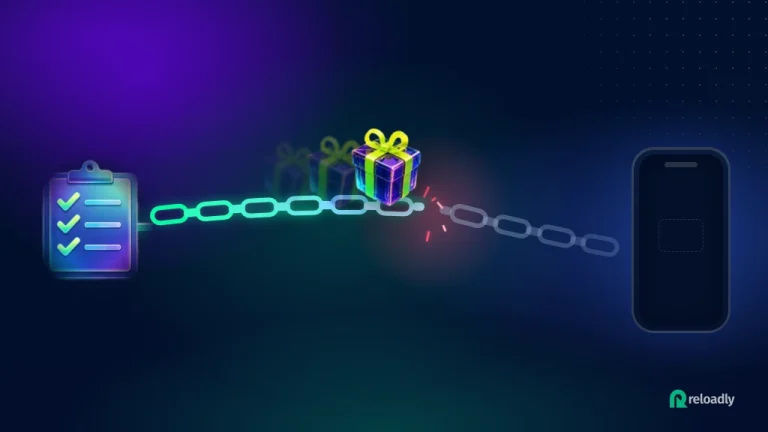
Between a finished survey and a reward in someone’s hands sits a chain of steps that research operations teams own. The response is accepted, the quality screening clears it, the country and reward type are read from the respondent’s record, a reward is issued, a message is delivered, and the person redeems it. Redemption is the moment the recipient claims the reward and turns the code into something usable.
Incentive fulfilment is the operational job of getting a reward from an accepted response to a respondent who can use it. It is the part of research operations that most resembles a payments function, and it is usually staffed as though it were an admin task.
Every one of those steps is a place the reward can stop, and the failure is almost always silent: nobody files a complaint, they just do not answer the next invitation. We took that chain apart step by step in ten things that break between survey complete and incentive received.
Why one reward type does not travel across markets
A reward that works in one country can be unusable in another, and the gap is wider than most incentive plans assume. The assumption built into most multi-country programs is that every market has a gift card or a card payment the respondent can use. That assumption is wrong in a predictable set of places.
The World Bank’s Global Findex 2025, published in July 2025, puts numbers on the gap. 86% of adults worldwide own a mobile phone, while just under 80% hold a financial account. About 900 million adults with no account at all do own a phone, 530 million of them a smartphone.
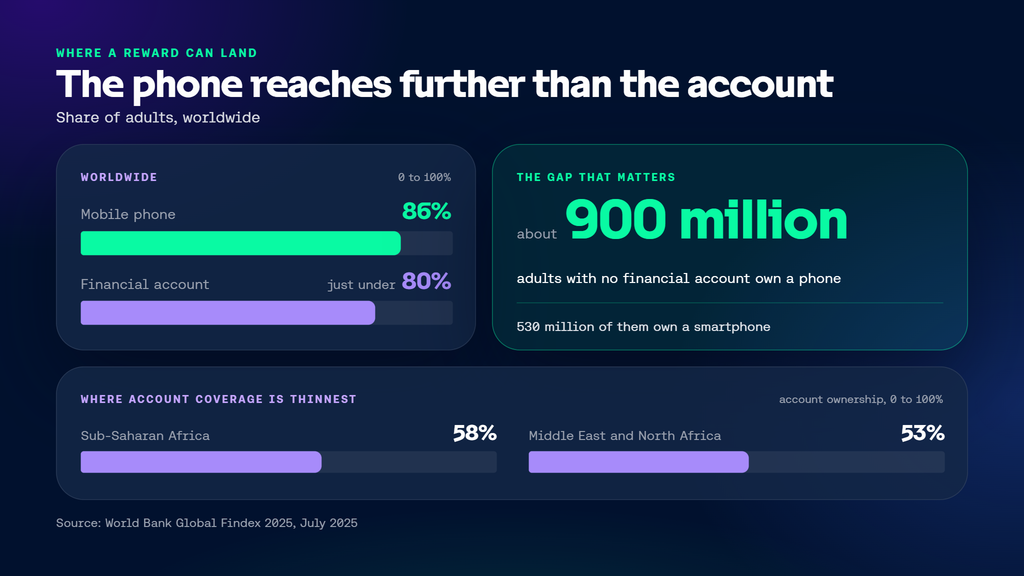
Those gaps are concentrated. Account ownership runs at 58% across Sub-Saharan Africa and 53% in the Middle East and North Africa. A study with 400 completions in each of twelve markets will meet this in several of them. Meeting it at payout, the moment the rewards are sent, is the expensive time to find out.
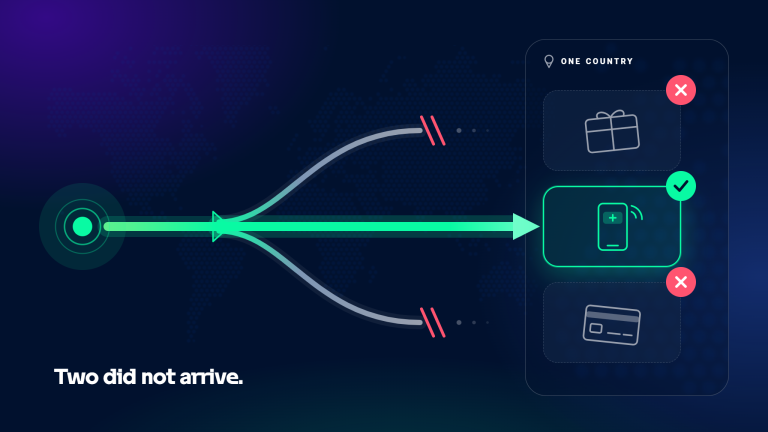
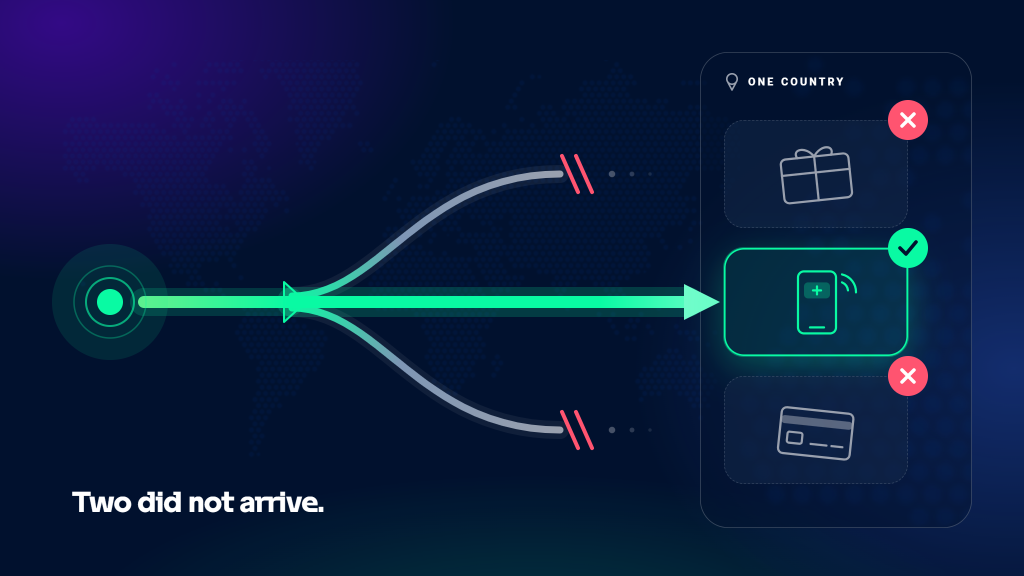
Say a London research agency is running that twelve-market study, with Kenya and Nigeria in the set. The questionnaire translates fine. Enough people take part in every market. Then the reward menu offers a card catalog that Kenya and Nigeria cannot meaningfully use. Two markets’ worth of incentive budget is sitting in rewards nobody will claim.
What do you do where gift cards do not reach?
Mobile airtime and data top-ups reach people in markets where gift cards and card payments do not. A top-up is a direct credit of calling time or mobile data to a phone number, and it needs nothing from the recipient except the number they already use.
Mobile money, a phone account that holds and moves cash, is not a marginal channel. GSMA, the mobile industry body reported more than $2 trillion moving through it in 2025, across 2.3 billion registered accounts. That figure is from its State of the Industry Report on Mobile Money 2026, published in March 2026. For a very large number of the people research teams want to hear from, that is simply how money works.
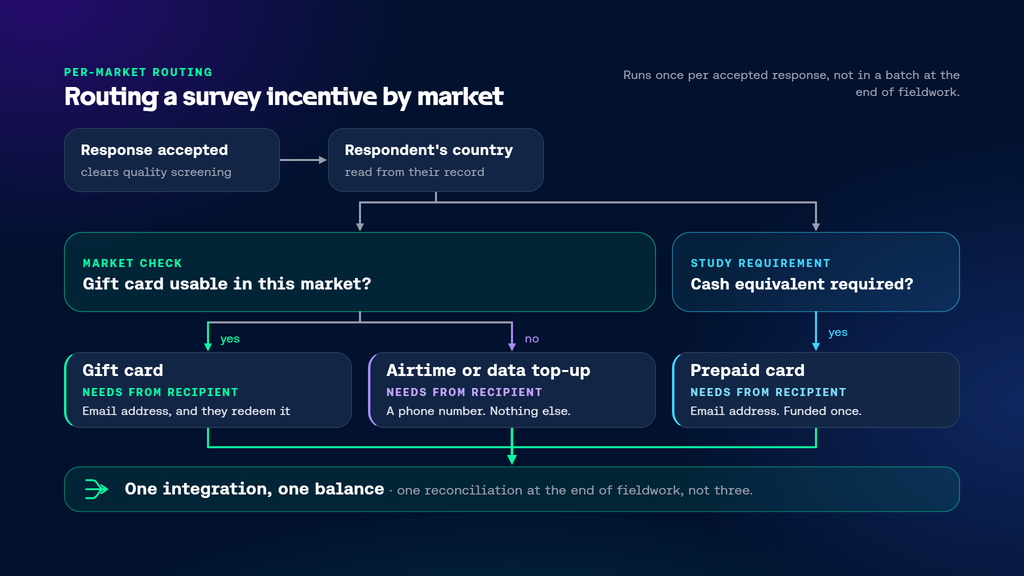
Airtime and data top-ups reach people a card cannot, which is why reward choice per market is a coverage decision rather than a preference setting. Reloadly delivers gift cards, airtime, data and utility payments such as an electricity bill through one API, the single connection a research team’s own software makes to send every reward type. A study can offer a card where cards work and a top-up where they do not, without taking on a second vendor for the second case.
The real cost per rewarded respondent
The cost of an incentive is its face value, what the reward is worth to the person receiving it, plus the fees, the currency conversion and the administration behind it. FX, the conversion between two currencies, is the line most incentive budgets understate, because the rate applied at payout is rarely the rate used in the plan.
A research budget built on face value alone will be wrong in every market where the study does not pay in its own currency. Reloadly supports 100+ currencies, and publishes its pricing. Reconciliation, matching every reward sent back to the project that paid for it, is still the research team’s own work at the end of fieldwork. The mechanics of that currency mismatch, in a different industry, are in why cross-currency payout reconciliation breaks.
The number that matters is cost per successfully rewarded respondent, not the advertised transaction fee. It counts the failed deliveries, the unclaimed rewards and the re-issues, and it is the only figure that compares two delivery approaches honestly.
How Reloadly delivers survey incentives
Reloadly is the delivery layer research teams integrate to pay respondents across 150+ countries, meaning any country not under sanctions. One integration covers the markets a study is in today and the ones it adds next quarter.
The reward menu matters as much as the reach. Reloadly’s gift card catalog carries 1,000+ brands and 14,000+ gift card products. A respondent can be offered something locally recognisable rather than a global brand they have no use for. It is the same catalog-depth problem recognition platforms run into when they source rewards. For teams that need a cash-equivalent option, meaning a reward spendable anywhere rather than at one brand, Swype Flex is a virtual prepaid Mastercard. It is single-load today, meaning it is funded once and not topped up again.
The practical effect is that reward choice becomes a per-market setting rather than a per-vendor negotiation. A study can pay a gift card in one market, a mobile top-up in another, and a prepaid card where a cash equivalent is required, from the same integration and the same balance.
Common questions
Do survey incentives bias the results?
Incentives change who responds, and that is measurable rather than hypothetical. NORC’s June 2025 test found that raising the incentive from $2 to $5 produced a group that differed by age, sex and place of birth. For most studies this works in favour of the data, by pulling in people who would otherwise be missing. The effect should still be checked against the plan for who the study set out to reach.
How fast should a survey incentive arrive?
Immediately after the response clears quality checks, in practice within minutes. Delay is the most common reason a respondent does not take part again, and it is the easiest failure to remove. A digital reward can be triggered automatically the moment a completion is accepted, rather than batched up and sent at the end of fieldwork.
Can a research team pay a respondent without attaching the payment to their answers?
Yes, and it is a data-handling decision in the study design rather than a property of the reward. Delivery needs a destination, which means an email address or a phone number. How that destination is stored, and whether it sits in the same record as the survey responses, is set by the research team and its own privacy obligations.
Pay respondents in every market your study reaches
Reward delivery is the part of a study the respondent judges you on. It is also the part most likely to be running on a spreadsheet and a card catalog that stops at the border. Map reward coverage against every market the study will run in before fieldwork opens, not at payout. Mapping it early costs an hour. Finding the gap late costs a whole round of fieldwork.